
Room humidifiers for dry indoor air
How to choose and use a room humidifier for dry indoor air without relying on brand recommendations.
Why a room humidifier can help
When cold or dry outdoor air is heated indoors, relative humidity can fall quickly. Low indoor humidity increases the drying load on skin, especially in bedrooms and home offices where people spend many continuous hours. A room humidifier does not replace skin moisturizers, but it can reduce the environmental stress that pulls water away from the stratum corneum.
The best choice is usually not a specific brand. It is the type, capacity, controls, maintenance burden, and room fit that match how you will actually use the unit.
Evaporative humidifiers
An evaporative humidifier pulls air through a wet wick, pad, or filter. Water enters the air as vapor, and a fan moves that humidified air into the room. Because evaporation slows as the room becomes more humid, this design is somewhat self-limiting.
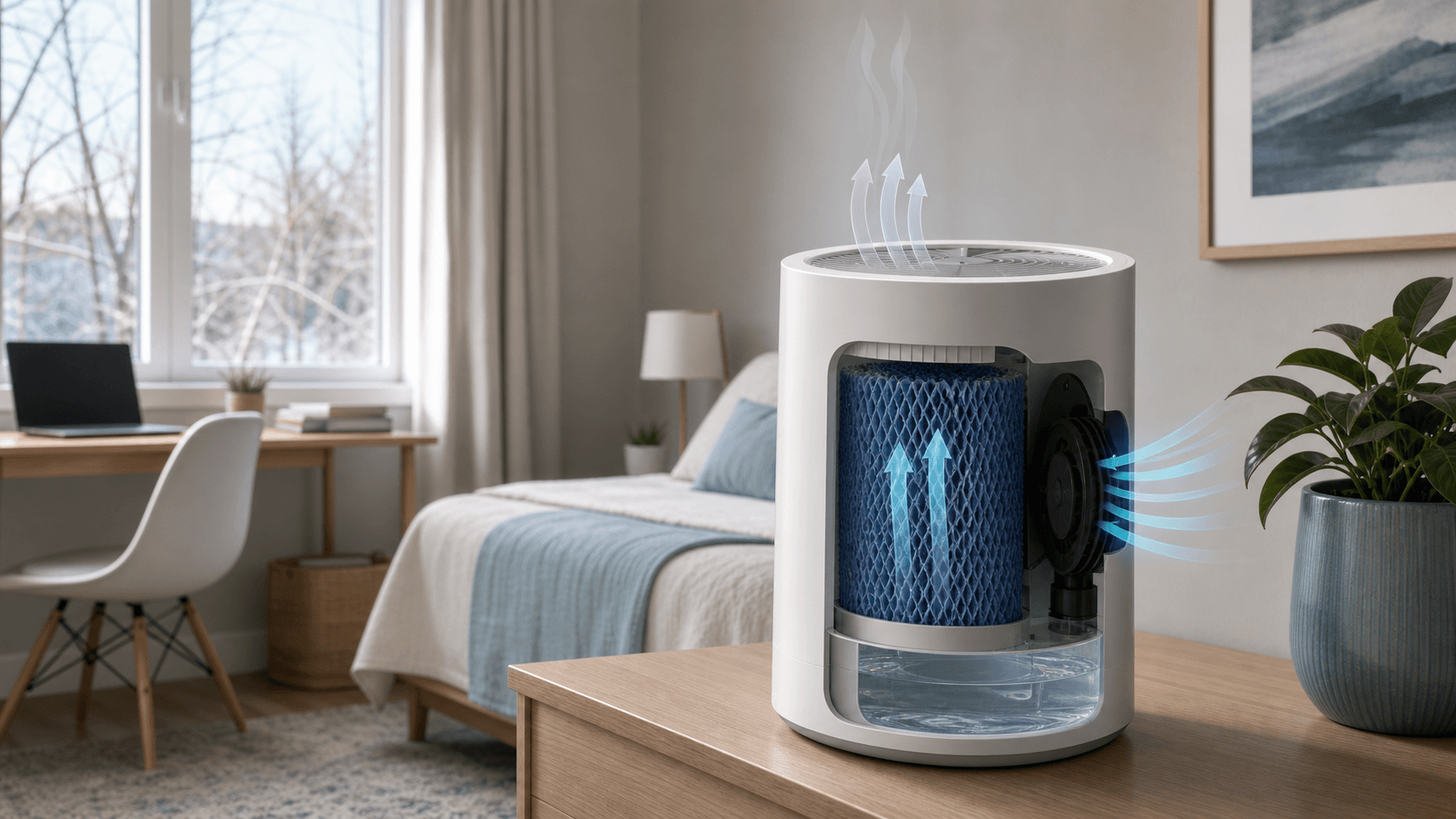
- Pros: tends to release water vapor rather than visible droplets, is less likely to leave mineral dust in the room, and naturally slows output as humidity rises.
- Pros: good for bedrooms or larger rooms when the fan and tank size are appropriate.
- Cons: the fan makes some noise, wicks or filters need replacement, and output can drop if the wick dries, clogs, or is not cleaned.
Droplet-emitter humidifiers
Droplet-emitter humidifiers, including ultrasonic and impeller-style units, create tiny water droplets and send them into the room as a visible or invisible mist. Those droplets then evaporate into the air if the room can absorb the added moisture.
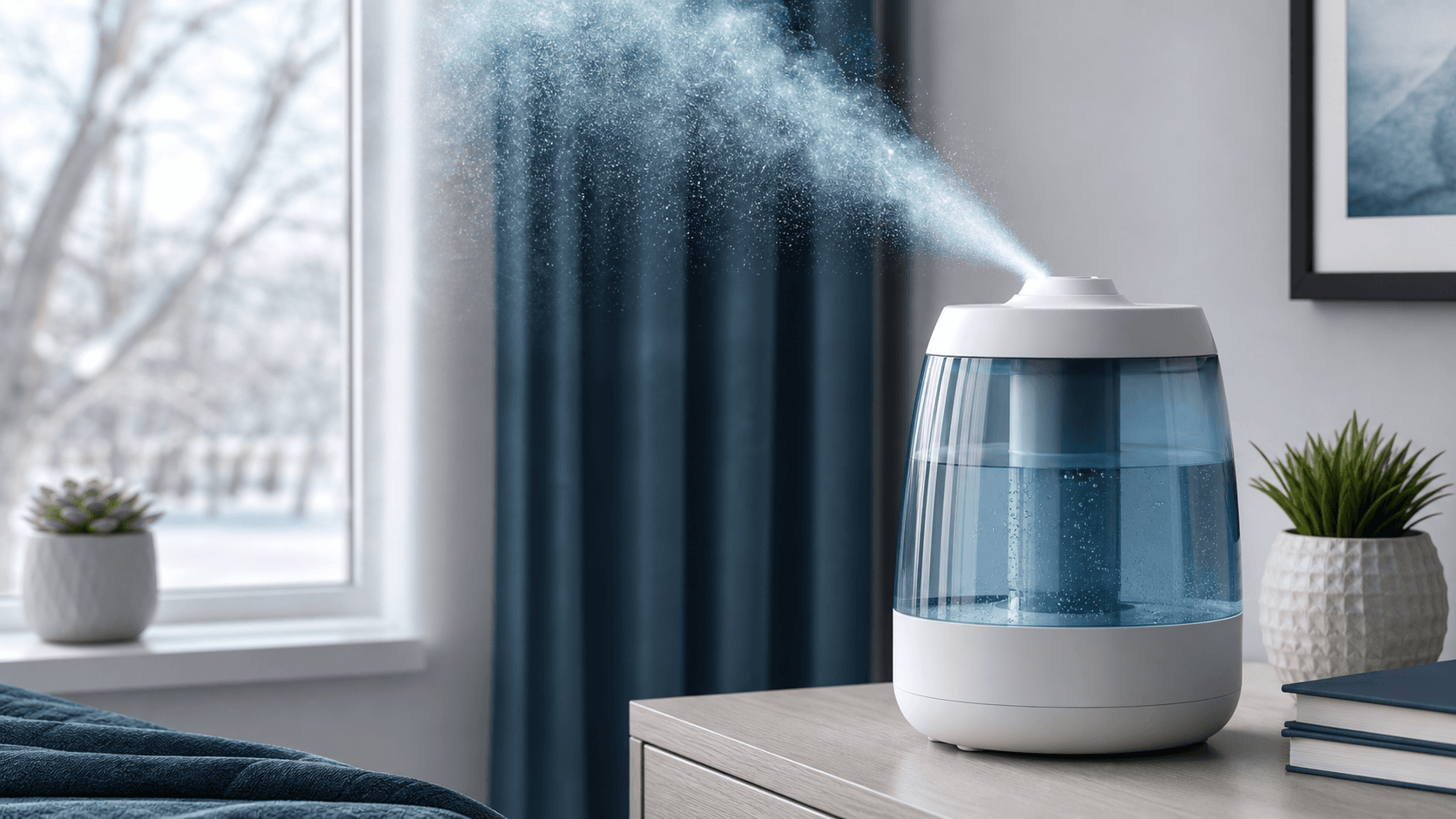
- Pros: often quiet, compact, energy efficient, and capable of high moisture output for their size.
- Pros: useful when fan noise is a major concern or when a small room needs a quick humidity boost.
- Cons: minerals in tap water can become white dust on nearby surfaces, and droplets can carry contaminants if the tank is not cleaned regularly.
- Cons: mist can wet furniture, bedding, walls, or floors if the unit is too close to a surface or output is too high for the room.
The challenge of sizing a room humidifier
Room sizing is harder than matching a product label to square footage. A humidifier has to add enough water to offset the drying effect of outdoor air, heating, air leakage, room volume, open doors, HVAC operation, and absorbent materials such as wood, rugs, bedding, and furniture.
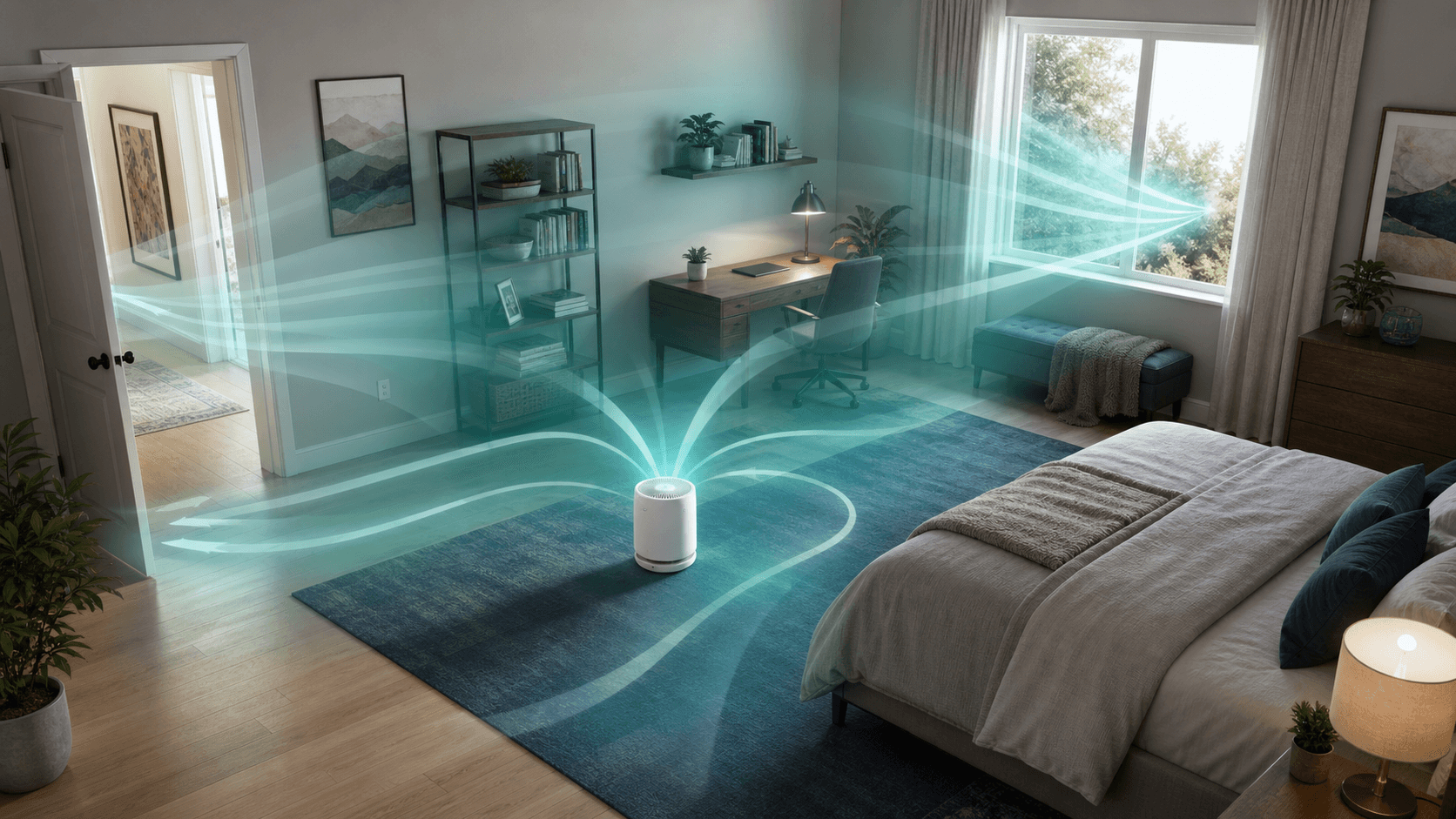
Manufacturer room ratings are useful starting points, but they usually assume a fairly closed room with standard ceiling height and controlled test conditions. A leaky bedroom during a cold spell may need more water than the same square footage in milder weather. A home office with the door open to a hallway may behave like a much larger space.
Tank size and output rating also need interpretation. A gallons-per-day rating may reflect continuous operation at a high setting, not the quieter nighttime setting you might actually use. Evaporative units may slow as the wick ages or humidity rises. Droplet-emitter units may appear powerful but can over-wet nearby surfaces before the whole room reaches the target humidity.
The practical approach is to size for the room where dry-skin exposure matters most, often the bedroom. Use a simple hygrometer or an indoor sensor, run the unit with the door in its normal position, and watch whether the room can move out of the very dry range without condensation on windows or damp surfaces.
Use humidifiers together with lotions
Lotions and creams work at the skin surface. Humectant ingredients help hold water, and occlusive ingredients help slow water loss. A humidifier works at the room level by reducing the gradient between skin water and room air. Used together, they address both sides of the dry-skin problem.
A useful trigger is sustained indoor relative humidity below 40% or a Dry Skin Index greater than 6. At those levels, consider running a room humidifier during sleep or long indoor work periods, while also applying lotion or cream to dry-prone areas after washing, bathing, and before bed.
The goal is not to make the room damp. For many homes, moving a dry room toward roughly 40-50% relative humidity is more practical than chasing a high humidity number. Reduce output or stop humidifier use if windows fog, surfaces feel wet, bedding feels damp, or musty odors appear.
Maintenance matters for either type. Empty and dry the tank regularly, clean the unit according to its instructions, replace evaporative wicks when needed, and consider distilled or demineralized water for droplet-emitter models if tap-water minerals leave residue.
Dermidia Guide Lite
Turn this science into weekly guidance
Dermidia Guide Lite turns this science into a saved dashboard, seven-day outlook, compact 52-week context review, and weekly care cue for your area. Sign in by secure email link — no password or credit card.
Your email is used for Dermidia Guide Lite and is not shared with 3rd parties.